Showing posts with label
hire testing software companies.
Show all posts
Showing posts with label
hire testing software companies.
Show all posts
Why Testing? Testing is the integral part of software development life cycle. It is often said that testing is the fate line for any software application or product. This indicates the importance of testing in the industry. The top IT giants of the industry give maximum priority to their testers than even developers; because they understand that tester determines the quality of the end product. Hence they don’t hesitate to hire testers at much more wages for the industry. They often believe that in order to sustain in the market with prestige, they need to provide better products and for the same the importance of testers is unique and unmatched. Anyway, today we will discuss about the two basic types of testing methodologies and their importance in the industry. 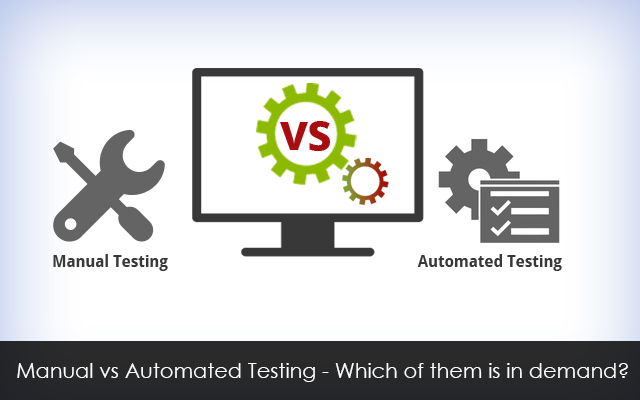 Manual testing: From the name itself, we can assume the meaning and procedure of the testing methodology. Manual testing is the process in which a software application or product is being tested by a person or a group of testers without any machinery or software help. In other words we can say here the testers test the application using their experience and expertise. It is the primitive way of testing any application. Though the testers give their maximum effort to make the application bug free; but, it can’t be achieved in practical; because, there must be some loopholes in the application due to the human error. Moreover, the process is damn tedious and frustrating when we have a large application on board. It becomes even more time consuming and inefficient for complicated large scale applications. Automation testing: The automated testing is the new era testing approach for efficient and quick testing. It eliminates all the drawbacks of that of a manual tester. This testing is done by a software application i.e. automation testing tools. Hence we can expect quick process. Moreover, the tester has the option to run a testcase repeatedly to avoid irritating iterative modules; because, once the automation tester writes a testcase, he can run it any time as per the requirement of the application. This is extremely beneficial when we deal with a huge application having several common modules embedded throughout the application. Moreover, we can avoid the human error through these testing tools. Automation testing tools can save both time and money through an efficient software tool for the testing process. Industry demands for: This is the biggest question here, isn’t? Well, the answer is simple yet little descriptive. From outside, you can say that Automation testing is best; but it is not hundred percent correct. Because automation testing tools needs some initial investment to purchase the licence for commercial use. Hence for small applications like some static applications, or some small websites, it is recommended to use manual testing, because there we have less resource and the application can be easily handled by any tester. On the other hand, for complex or large scale applications, we have to rely on Automation testers, because here we need efficient testing that will be done in less time and hence increase the productivity to large extend. Mindfire provides web based software Testing services through out testing experts who can help you build projects within allocated budgets and time schedules. If you are thinking of outsourcing software Testing projects to India and would like to hire software Testing engineer, please get in touch with us. We would be glad to assist.
To become commercially successful, each software application has to deliver rich and flawless user experience. So software testing has become essential for businesses to make the software projects successful. It has also become essential for enterprises to deploy talented and quality software testers to identify and fix all bugs, errors or flaws in the application before its commercial release. However, it is also important for software testers develop certain personal level skills, in addition to technical knowledge and testing skills, to make the software testing project successful.
How to Become a Quality Software Testing Professional? Learn Programming: As a software tester, you are not required to write longer lines of code. But to become a quality tester, it is a very good practice to have some coding experience. In addition to becoming proficient in a programming language, the coding experience will also help you in identifying and predicting bugs in the code before starting the testing process. The programming experience will further make it easier for you to solve complex problems by coordinating with the developers.
Focus of Application’s Critical Path: It is also important for you to identify the critical path of the application. The term critical path refers to the functionality that is frequently or most often performed by the user. As critical path of the application can have a huge impact on the business process, you must put special emphasis on the functionality during testing. The emphasis on critical path will eliminate the possibility of all critical errors.
Keep Usability of the Application in Mind: Along with ensuring that the application delivers flawless user experience, it is also important for testers to ensure high level usability. The test plan must focus on higher usability to identify and eliminate the redundant paths. You can even participate in the designing of new functionality to easily reduce the number of errors.
Keep Things Simple: Many testers consider agile testing methodologies as complex. But the agile testing methods aim to keep things simple. As an agile tester, you are responsible to guide the developers towards the end-user’s goals and objectives. At the same time, you must use a set of collaborative tools to communicate transparently with both developers and client.
Response Immediately to Changes: Nowadays, businesses frequently change the features and functionality of the software during development process. So you must be agile enough to respond to the changes immediately. It is also important to write the test cases and schedule test activities in a more flexible way. The flexibility will help you in accommodating, and responding to the changes as and when they occur.
Maximize Test Coverage: Often testing professionals find it difficult to reach 100% test coverage. But they must try to maximize the test coverage to while testing any application. You can achieve maximum test coverage by dividing the application under test into a number of smaller and individual functional modules. You can even consider dividing the large functional modules into smaller parts. The division will make it easier for you to write test cases for the individual unit modules.
Analyze the Test results thoroughly: The quality software testers always analyze the test results in detail. The final test result can be either pass or fail. But you must analyze the final test results thoroughly. The analysis of the final results will help you in solving the problem by troubleshooting its root cause. The developers also appreciate your initiative to provide solutions to certain problems, in addition to logging the bugs.
The trends in software testing keep changing frequently. Most enterprises, nowadays, adopt the latest test automation tools and frameworks to deliver flawless software testing. So it is important for testers to note down new terms, concepts and observations, along with reading news and blogs regularly. The testing professionals can further join various online forums to acquire additional wisdom, while discussing the latest software testing tools and techniques. Test your applications by hiring testing services of an independent software testing company that fits your budget and time.
We provide QA testing services. If you would like to hire software testers from us, we would be glad to assist you at Mindfire Solutions.
As a key part of software testing, test cases are used by the testers, developers and management executives. Normally, test cases are used as conditions to evaluate if the software application meets predefined specifications, and is ready to go live. The test cases further provide conditions through which the testers can verify and validate the application’s particular features or functionality. As test cases organize the entire software testing process, it becomes essential for QA professional to plan and write test cases effectively.
Tips to Plan and Write Test Cases More Effectively
 Understand the Exact Requirements: To write effective test cases, you must understand specific requirements. Also, you must remember that you must not assume any requirements while writing test cases. If you do not understand any requirement clearly, ask questions to the business analyst or client without involving the developers. Likewise, you must clearly understand the incomplete or ambiguous requirements before writing test cases.
Plan Test Cases to Cover All Requirements: Along the requirements, you also need to understand the features and functionality of the software application clearly. You need to ensure that the planned test cases cover all features and functionality mentioned in the requirement document. It is also a good idea to ensure that no requirement is left untested by using traceability matrix.
Write Independent Test Cases: When you write a test case to track multiple conditions, it becomes difficult to track the testing results and errors. So you need to ensure that each test case assesses only a single condition. Likewise, you must write independent test cases that can be executed without depending on other test cases. The independent test cases will make it easier for testers to easily assess different aspects of the application.
Create Test Suites: You can always accomplish exact scope of testing by avoiding repetition of test cases. Likewise, you must collect and combine generic test cases into test suites. The test suites will help you in saving the time and efforts required for writing standard common test cases. Further, the test suites can also be used throughout the project life cycle.
Decide Testing Priority: The significance of individual test cases will vary according to product, component or feature. So you must determine and assign testing priority while each test case. Once you assign the testing priority, the high priority test cases will be picked first during the execution followed by the medium and low priority test cases.
Break Complex Test Cases into Smaller Parts: When a test case has too many steps, it becomes difficult for testers to identify and fix the bug. There are chances that the tester may have to repeat all test steps to ensure that the bug is fixed. So while planning, you must break the large and complex test cases into several smaller ones.
Focus on Preparing Proper Data: While writing test cases, you will need a variety of input data. During testing, the application can pick the required input data from various predefined data locations. Also, the testers can provide input data while executing test cases. To effectuate test case writing, you must focus on the input data formats, and use the predefined data values to decide software and hardware requirements.
Decide the Test Case Format: The test case formats or templates vary from one organization to another. So you must decide the test case template by concentrating on several key elements. Along with the id, title and summary of the test case, the template can also include required prerequisites, test steps, expected results, actual results, test case status and comments. However, your choice of test case template must be simple and easy to understand.
Often reviewers reject test cases written by software testers because of bad quality. That is why; each tester must understand the important characteristics of a good test case. At the same time, he must plan the test cases by keeping in mind the goals of the software testing project. Test your applications by hiring testing services of an independent software testing company that fits your budget and time.
We provide web based software testing services. To hire software test engineer from us, please reach out to us at Mindfire Solutions.
 Software Development Life Cycle or SDLC has various types of models. Each of these models is used during the testing stage. Therefore, testing proves to be an essential component in SDLC. With the help of various types of testing including element, assimilation, user recognition and regression tests, the coders are able to provide a reliable application. The server system is any kind of system network is measured as the main terminal whereas the other procedures are considered minor terminals. Therefore, SDLC will include both the main and minor terminals while approaching the statement.There are, in fact, various phases of testing in SDLC that are indispensable. These are vital as they help in the development of the project and clears out the glitches, if any. Here’s a short description about each stage – Various Phases of Testing in Software Development Life Cycle The first phase of testing is known as the inception. At this stage the engineer gets the scope to identify the major requirements for the project. The data is generally recorded and kept in the architectural reference document. The main issues tackled in this stage are information, data and system designs. The next phase is known as elaboration. This is where the test engineers decide about the project plan. An important phase, here the complete design is being documented and stored in the System requirement document in addition to the product as well as requirement documents. In the JAD stage, commercial reviewer, planner, execution, project organization, etc are attended to. Next comes the construction stage. At this phase, the main role is played by the programmers. They build the project as per the approved plan at the JAD phase. The testers are supposed to follow the programmers for carrying out several adjustments. Several types of faults might be overlooked or misunderstood by the programmers. At this stage it is the testers who should be solving the problems. In order to develop the HLS or high level scenario, a testing group is needed. The testers are expected to ensure that all the elements in the project adhere to the standard quality affirmation. Finally, it is the transition phase where the errors found are tested once more by regression test. This helps in developing consistent systems. Purpose of testing: Testing, thus, plays a major role in developing software by identifying the errors and providing solutions to solve them. This is important so that quality solutions can be delivered to the clients. Every software has bugs and they need to be fixed. The main purpose of this process is to check whether there are any discrepancies in the development procedure. Quality cannot be sacrificed or overlooked when it comes to developing software. The resting process ensures that all the requirements are included and the final product is functional as expected. The test plan is document where all the necessary information about the project is listed. Every data required for each of the test cases are also to be found here. Thus, all the test cases can be validated in order to find out whether there are any errors in the system or the app. Once the test plan is approved it leads to the closure of the project. Thus, the cases are quite vital for designing templates. Additionally there are scripts which are subsequently converted into the cases. Early testing – a blessing: It should be noted at this stage that early testing is recommended for development processes. The quicker you find the bug, the better. It helps a lot of control the cost if bugs are found and fixed at early stages of the development. Moreover, if they are found early it takes lesser time to fix the issue. In addition, if the tests are written beforehand, it helps to fix the cases at later stages. Preparing for this early also prevents the occurrence of unknown risks and there is adequate time to deal with the delays and risks. Last but not the least, this process leads to the production of several intermediate products that can be checked to confirm whether they are meeting the standard needs of the users. Keeping user experience in mind is an essential component of this process. Hence, the software testing is an indispensable method when it comes to developing a bug free and user friendly system or app. If you are thinking of outsourcing software testing projects to offshore companies, you must evaluate them to see if they are sufficiently agile or not! We provide application software testing services. If you would like to hire software testers from us, we would be glad to assist you at Mindfire Solutions.
 With more and more IT companies adopting test-driven development (TDD) approach, the software testing services have become an integral part of product development life cycle. But to effectuate software testing, the QA professionals have to make and implement strategies by considering key factors like competitive pressured, shorter time to market, and constant changes in technology. Along with delivering a flawless software application, the testing strategy will also aim to beat competition by shortening time to market. However, the future of software testing will also be impacted by several emerging trends in testing and QA. Emerging Trends that will Impact the Future of Software Testing Test Automation: An enterprise can avail several benefits by automating its testing efforts. The test automation tools make it easier for QA engineers to repeatedly evaluate different aspects of the software. In addition to improving the quality of the software, the tools will further help businesses in quickly covering based throughout the development. Also, the test automation will help enterprises in beating competition by reducing both cost and time to market. Emphasis on Security: Security is one of the key factors in both manual and automated software testing. But many reports have highlighted that the testing strategy of most companies focus primarily on performance and emphasis. The reports also highlighted that test strategies of more and more companies are now focusing on security. As the application needs to be accessible on various platforms and devices, it has become essential for business to protect it from hacking, cross scripting attacks and other cyber crimes. Context-Driven Testing: The enterprises have realized that the same testing strategy will not meet the needs of different applications. So many companies, nowadays, opt for context-driven testing. The companies require QA engineers to develop an arsenal of skill for different contexts through formal training and on-the-job observations. The enhanced skills and expertise of testers will make it easier for them to make test strategies by evaluating and interpreting a particular situation effectively. Growth of Mobile and Cloud Testing: A number of reports have highlighted a steady increase in the mobile and Cloud testing activities. With more and more businesses using mobile devices for operation transactions and customers, it has become essential for them to ensure mobile security. Likewise, many businesses opt for Cloud based testing to create and maintain the testing environment effectively without investing additional time, effort and funds. However, the companies will be required to address several data security and performance challenges to adopt cloud based environments successfully. Agile Environment: With most software applications being developed in agile environment, the businesses have to use right test tools and methodology to complement the development. The agile development requires enterprises to test various aspects of the software continuously before the delivery phase. So the testers have to adopt testing in production approach to assess the software in an agile development environment. Test Center of Excellence: Many IT companies will use Test Center of Excellence (TCOE) as the main criterion to choose independent software testing vendors. Several reports have highlighted that most companies, nowadays, prefer hiring vendors who have already fully operational TCOE’s. However, a software testing company needs 3 to 6 months for developing a TCOE. Also, it can avail the benefits of the TCOE only after 3 years. That is why; more software testing companies will build TCOE to impress clients. Cost and Process Optimization: Many IT companies, nowadays, focus more on QA and testing activities than core product development. So the QA and testing activities will become more process-centric in future. Also, the businesses will adopt a collaborative testing model that will require the involvement of different stakeholders including client. The increased focus on software testing also make the businesses allocate more funds for QA activities. The optimization of testing process and cost will further make many companies hire independent software testing services. Many experts even predict that more and more companies will invest in independent software testing services, open source test automation tools, and agile testing models. Likewise, many companies will switch to Cloud based testing to avail cost benefits along with higher flexibility and feasibility. When you hire testing software companies, you must ensure that the team has proven experience in handling medium and large sized testing projects over a long period. We provide software testing services. If you would like to hire software test engineer from us, we would be glad to assist you at Mindfire Solutions.
 One thing that is often not even considered by developers and in fact quite under-estimated is testing. However, it is a key element in any application development; without this pillar no developer can put the developed software or application on market. Through proper evaluation the quality is determined which in turn consists of several dimensions like features, adjustability as well as engineering.There are several kinds of tests that are carried out to determine the quality such as platform compatibility tests, functional tests, usability tests, scalability tests, performance tests, robustness tests, etc. One thing that must be remembered in this respect is to assign the job to an actual specific tester with distinct test roles; here the role of a developer and a tester is poles apart. While testing, to yield the best possible results here are some practices that you must follow. 1. Planning ahead- When a software or application is being tested, the undertaking is important as well as costly which might require careful execution. For that purpose it always helps if as a tester you can plan ahead. A careful planning as well as execution ahead of the evaluation phase ensures the success as well as usefulness of tests. In the planning phase you must consider the five essential steps which are establishing baselines, establishing expectations as well as goals, understanding the challenges that might come with the evaluation procedure, getting ample help as well opinions from the client, operations as well as development team and early involvement of third parties. 2. Building a solid strategy for application evaluation- Building a solid strategy ensures that the best procedures are followed from the word go. For effective strategies you must include exploratory, automated as well as manual tests so that the risks can be reduced efficiently and release cycles tightened. In this respect there are three kinds of test approaches that can be followed- integration which exercises entire subsystems while ensuring that sets of components fit as well as interact nicely; unit which helps in validating of the system’s smallest components so that known outputs and inputs can be handled correctly; and functional that helps in verification of end-to-end scenarios which might engage your users. In essence, functional tests can affect the entire system, but still unit as well as integration testing is important due to recovery speed as well as test performance. Functional test is always slow in running too. 3. Staggering the user number- Applications have to support a large number of users at the same time; so one of the scenarios to consider is its performance capability when handling a load due to a vast number of users. The best way of analyzing this properly is to increase the number in an ascending manner. If you start all the test drivers simultaneously then the results might not be very accurate since some time should be given to the system so that it can warm up a bit and prepare for a heavy load. 4. Experienced as well as informed management- Experience certainly counts a big deal, especially for something as crucial as evaluation it is best to go with experience. On top of that the management must ensure that all tiers involved with the application are informed about its aspects so that the best possible solution and insights are achieved. 5. Including early feedback- This starts in the development process itself where test engineers can be included. They can provide feedback on the sustainable development, feature scope too as architecture which can lead to an all-round well developed application. These days, a software project is far more complex that what it used to be even sometime back. With the rapid changes in the methods and procedures, it is best to keep an open eye and establish some ground rules before beginning any work. The same is applicable for testing too since knowing what to do and what to avoid will help in the long run. When you hire testing software companies, you must ensure that the team has proven experience in handling medium and large sized testing projects over a long period. We provide software application testing services. All of our testers have cleared industry certifications in testing. If you would like to hire software testers from us, we would be glad to assist you at Mindfire Solutions.
HP Unified Functional Testing (UFT) software is used widely by developers across the world to automate testing process. The software application makes it easier for the QA professionals to carry out a variety of testing including functional testing and regression testing. The testers can further write test scripts using Visual Basic Scripting Edition (VBScript) scripting language. The scripting language simplifies the process of manipulating the objects and controls of the application and specifying a test procedure. The integrated development environment (IDE) provided by the application helps testing professionals to write and validate test scripts more effectively. With more and more organizations automating their testing process, the demand for HP UFT software is increasing at a steady pace.
Why Automate Your Test Process with HP Unified Functional Testing Software
Effective in Testing both Front-end and Back-end of the Application
HP has designed the Unified Functional Testing software application as a comprehensive testing platform to test both GUI and API. The combination of GUI testing and API testing makes the software useful for testing both front-end (User interface) and back-end of a software application. The QA professionals can use the GUI testing method to evaluate the front-end of the software application, whereas the back-end of the application can be tested using the API testing method.
Simple and Easy-to-Use
Often organizations have to provide training to software developers and testers while adopting a new technology. Despite being effective in functional testing and regression testing automation, UFT is still simple and easy-to-use. So your workers can learn its features and navigation option easily, and start generating reports and validate the user-friendly results. Further, UFT can be combined seamlessly with Test Management Tool (Hp-Quality Center). So the users can easily schedule tests and monitor the test results.
Facilitates Data-Driven Testing
HP has further designed the UFT software with support for data-driven testing. So it allows the data to be stored as a data table to be reused for another project. The QA professionals even have option to implement data-driven testing as a Microsoft Excel workbook, which can be accessed from the UFT application. The application further supports two distinct data table types, i.e., local or action data sheets and global data sheets.
Quick Scripting Process
The amount of time required for completing functional or regression testing is impacted by the time required to write test scripts. HP UFT allows testing professionals to write test scripts using VBScript. In comparison to object oriented programming languages, VBScript is easier to learn and code. Thus, the UFT scripting can be completed by the professionals within a shorter span of time.
Enhanced Code Reusability
Like other powerful test automation tools, HP UFT also enables QA professionals to save the test scripts, function libraries, objects, components and application areas. It comes with a centralized quality control solution known as ALM. The developers can store the test scripts, function libraries, objects and components with the with the ALM project. The details stores with ALM project can be shared with other QA professionals, and reused for other testing projects.
Extensible to Several Development Environments
Despite being used by QA professionals to automate both web based and windows based client-server applications, HP UFT still does not support all operating systems and web browsers by default. But the testers have option to install corresponding add–in to make the software compatible with a particular development environment. The application comes with three default add-ins, i.e., ActiveX, Visual Basic and Web. But users can still load corresponding add–ins to use UFT with Java, .NET, SAP, Oracle Apps, Delphi, Web Services and Flex.
HP further allows organizations to use Unified Functional Testing software either the seat or concurrent license. The seat license is specific to a computer on which the UFT software is installed, whereas the concurrent license is a network based license that enables multiple users to use the application at a time. So an organization has option to choose the licensing according to its specific needs and budget. If you are planning to hire services of offshore software testing companies, you must evaluate them to see if they are sufficiently agile or not!
We provide QA testing services. We have expert testing team with 100% certification ratio. To hire software quality assurance tester from us, please reach out to us at Mindfire Solutions.
The software industry's trends keep on changing on a daily basis and with that, trends related to testing change as well. There was a time when software testing did not have much prominence; some evaluation was manually carried out while the rest of the testing was outsourced. But gradually, people are waking up to the importance of software testing and as a result, this has become a professional career for many. New testing paths opened up with trends such as SOA or Service Oriented Architectures, Web-based applications, Wireless Technologies, SaaS or Software as a Service, Mobile Technologies along with an increased emphasis on robustness, re-use, reliability and repeatability. Everywhere, evaluation strategies are being changed so that the trends can be accommodated, making the sphere more and more professional.

The changes are being implemented for efficient as well as effective application development for quality systems. In fact, for that, huge amount of emphasis is being placed on improvement of Analysis as well as Design phases so that the early evaluation in the areas can be ensured. When capture tools of analysis as well as design requirements are built-in, Static Testing are robotized to lend clarity, better chances of completeness and facilitate eradication of ambiguity as well as assumptions. The product will surely become more robust, reliable as well as reusable.
Under the changing circumstances, professional testers would have to concentrate further so that value can be added both to software development lifecycle as well as to the business. They should operate in elevated positions by combining creativity, a process-driven structured approach, ability to define and articulate evaluation criteria and quality in the models as well as inquisitiveness. The tester's role is slowly becoming more essential as well as interesting. With that, software evaluation has become a great career option for many professionals. There is high a demand of skilled testers in the area so that they can analyze the test results, identify bottlenecks so that tuning techniques can be suggested.
To make professional evaluation a good career option, a tester should specialize in some main areas.
Knowledge of automation evaluation tools- Automation along with performance testers have a great demand in the market. As such, to succeed in test automation you need to have a good experience or knowledge of scripting languages that the tools come up with. A very basic requirement is the knowledge on enhancement, validation as well as creation of test automation framework.
Domain knowledge- This is one of the foremost requirements as good knowledge regarding the application's domain area leads to addition of value in the resume of any professional. Several popular domains are there like telecom, BFSI, manufacturing, healthcare, embedded, etc and every area has quite a number of certifications so that testers can be trained as well as certified.
Certifications- There are several institutes that offer certifications based on specific testings which help in the improvement of the client's confidence on the evaluation of the professionals. Managerial certifications will certainly help them to scale up the ladder to success by increasing their technical competency.
Niche testing areas- The evaluation of the niche areas such as Security testing, mobile testing along with SOA testing, is gaining a lot of momentum in recent times. These areas are seeing the emergence of a number of tools. Evaluation professionals must be aware of the direction that the industry is heading for and update their knowledge accordingly, so that they can be ahead of others.
Test automation tools have become entwined with software testing's evolution in such a manner that the the developers mustget familiar with the tools, so that evaluation knowledge can easily be dispersed. It must be remembered that the capabilities along with the reach of functional testing is advanced by the tool but the paradigms for driving the evaluation effort are not advanced. For that, tests must be created and test automation's success is affected by the intelligence that is needed for the creation. As such, professional software testing as well as professional testers are gaining much popularity which is here to stay. If you are planning to hire testing software companies, you must evaluate them to see if they are sufficiently agile or not!
We provide web application testing services. If you would like to hire software quality assurance tester for your projects, please contact us at Mindfire Solutions.
The software developers constantly explore ways to make the application popular by delivering richer user experience. Along with the application’s look and feel, they also concentrate on improving its overall performance. A constant increase is also noted in the number of organizations adopting test-based development approach to deliver flawless user experience. The overall performance of a software application is evaluated by conducting a variety of tests. Normally, the testers conduct performance testing, load testing and stress testing to evaluate different aspects of the software. However, these three types of testing differ from each other based on some common points.
Major Difference between Performance Testing, Load Testing and Stress Testing
Nature of Testing
Performance testing is conducted to evaluate the performance of the components of a system under specific situations. Normally, the testing aims to validate scalability and reliability of the application, along with resource usage under a particular situation. However, the testing is conducted as part of the overall performance engineering process that aims to find the performance issues in the software’s design and architecture.
Load testing is carried out the maximum load that a system can restrain. This form of testing is often referred as endurance testing or volume testing. Under this testing, a constantly and steadily increasing load is applied on the system till it reaches the threshold limit. Unlike other types of software testing, load testing can be conducted smoothly by using test automation tools like LoadRunner.
As the name indicates, stress testing is done to decide the level of stress required to break down a system. A number of activities are carried out to overload the system with excessive resources and functionality. Often negative testing is also conducted as part o stress testing to remove non-functioning components from the system. This form of testing is essential to evaluate the capacity of a web application when it is accessed at a time by a larger number of users.
Objectives of the Testing
Each software application also needs to meet a set of industry-defined benchmarks. The primary objective of performance testing is to check the system’s benchmark behavior. Instead of concentrating on finding errors, flaws and defects in an application, performance testing emphasizes on evaluating the software based on several benchmarks and standards. The performance testing results must be monitored closely and accurately to decide if the software meets industry-defined benchmarks.
The main objective of load testing is to identify the defects that affect the application’s performance negatively. The defects can be related to memory leak, memory mismanagement or buffer overflow. Also, the testing aims to decide the maximum limit of various components related to the application including hardware, database and network. Along with deciding the capacity of the existing system, load testing also identifies bandwidth problems and load balancing problems. Thus, the defects and components are managed effectively to make the app take more loads.
Stress testing is performed to check the behavior of an application after its failure. The post-crash reports are analyzed to decide what caused the failure. While determining the reason why the system failed, the testers need to ensure that the sensitive data remain completely secure despite the failure. An effective stress testing strategy will ensure that all components of the application become normal after the crash. The right stress testing plan can further make it easier to avoid the most terrible break downs in future.
An organization must keep in mind the key differences between performance testing, load testing and stress testing while choosing test automation tools. As the objective of each of these three types of testing differs, the testing automation needs to be done according to specific objectives. If you are planning to hire testing software companies, you must evaluate them to see if they are sufficiently agile or not!
We provide independent software testing services. If you would like to hire software test professionals for your projects, please contact us at Mindfire Solutions.
In the software industry, the terms testing and quality assurance (QA) are used interchangeably. Many organizations even deploy a team of dedicated testers, and name it QA department. While considering software QA as a separate process, most organizations undervalue its significance as a significant and ongoing process. In nutshell, software quality assurance can be defined as the methods used to ensure quality by monitoring different software engineering processes constantly. However, the methods of QA can vary according to the nature and requirement of the software development approach. Along with adopting ISO 9000 standards, an organization can further ensure quality by adopting CMMI model. But each organization must consider QA as an integral part of the overall software development process, instead of isolating it as a distinct department.
Why Organizations Must Consider Quality Assurance as a Key Process?
1. Easy to Adopt Agile Processes: A constant increase is noted in the number of organizations adopting Agile methods to iterate software development projects. Along with making it easier to incorporate changed during different stages of development, the methodology further emphasizes on delivering high quality. With companies constantly exploring options to reduce project cost and time to market, it has become essential to ensure quality from the initial stages of the project. So organizations must integrate QA in each development process to avail the many advantages of Agile methods.
2. Address Different Changes: While developing a software application, the company has to address both technical and business quality issues. As the application needs to be developed rapidly within a stipulated timeframe, there are always chances the defects may naturally creep into the software. Similarly, the constant changes in end-user requirements results in several business quality issues. These issues must be addresses during each stage of development to deliver rich user experience. Thus, QA must be integrated into the development processes from the initial stages to handle different quality issues without putting any extra time.
3. Meet Exact Needs of a Business: The enterprise software applications are developed to solve specific business problems efficiently. So there must not be any gap between the end user requirements and the software delivered by development. The software also needs to be evaluated at various stages of development according to the requirements of the client. Further, there are chances that the client will want new features and functionalities to be included in the software during development. So QA must be integrated seamlessly with each development process to ensure that the product is meeting end user requirements exactly.
4. Save Both Time and Resources: Most business software applications, nowadays, need to be integrated with third-party solutions and services to deliver rich user experience. Further, the complex and complicated nature of the applications makes it a daunting task to complete the project on time. The extremely tight deadline also does not allow organizations to take additional time to evaluate the software’s efficiency and performance. When an organization considers QA as a distinct department, the testing professionals evaluate the software once the development is over. So many organizations are adopting test-based software development model to save both time and resources.
5. Facilitates Distributed Development: Within a short span of time, distributed software development has becomes widely popular among companies as a medium to curtail project cost. Many organizations deploy seasoned software developers and QA engineers who work in different regions. When a software program is being developed in a distributed environment, it becomes essential for the organization to integrate quality assurance in each process. When software testing is conducted at the end of development, there are always chances that the developers have to rework. But the gap between the end user requirements and software developed in a distributed environment can be eliminated by adopting QA as an integral part of the overall development process.
As an ongoing process, software quality assurance further makes it easier for enterprises to beat competition. Along with reducing time to market, the process will further make the software application popular by delivering flawless user experience. If you are planning to hire testing software companies, you must evaluate them to see if they are sufficiently agile or not!
We provide QA and testing services. If you would like to hire software testing engineer for your software projects, please contact us at Mindfire Solutions.
A gradual increase is noted in the number of organizations developing software applications in distributed environments. Under distributed development plan, bulk of the software development and testing efforts are outsourced to developing countries to curtain the project overheads, while a small team of consultants or in-house manages work on site with the business stakeholders. Further, many organizations implement Agile methods in the distributed environment to deliver quality software on time and on budget. According to the 8th Annual STATE OF AGILE survey, over 35% of software development companies use Agile with distributed development teams. So your organization can avail several advantages by using Agile to address some of the common problems related to distributed development.
Why Over 35% Companies Apply Agile Methodology to Distributed Development?
Facilitates Uninterrupted Communication
The Agile methodology facilitates smooth and uninterrupted communication among distributed teams regardless of their geographic location. Along with one-to- one communication, the methods further emphasize on on-the-fly interaction between team members. According to the methodology, an organization has to allow remote team members and project owners to communicate in a real time environment through emails, conference calls, video conferencing and texting. So the organization can eliminate the need to schedule formal meetings required according to the conventional project management methods. An organization can further avail competitive advantages by adopting Agile communication model.
Maintains Transparency across Distributed Teams
Unlike conventional project management techniques, Agile methodology emphasizes on uniting the members of distributed teams to unite around the team’s common goals and vision. The elimination of ownership silos results in code sharing and training among team members. At the same time, the Agile methods further require the project information to be shared continuously between stakeholders, product owners and development teams. The daily scrum or standup meetings between different stakeholders ensures that each party stay tuned to the current status of the project. Also, the frequent reviewing of requirements makes it easier to incorporate changes in the process to deliver better usability results.
Optimizes Decision Making Process
Often companies find it a daunting task to take quick decision in a distributed development environment. Along with defining the team’s common goals and vision to each member, Agile methods further empower distributed teams to decide how to complete the assigned tasks on schedule. So each distributed team can carry out its activities without waiting for the centralized management’s direction or approval. At the same time, each member of team clearly understands his responsibilities, along with having the authority required to take sound decisions according to the iteration’s requirements. So the prompt decision making process is no way affected by the different geographical locations of the teams.
Enhances Scope for Automated Software Testing
The Agile methods further optimize the scope of automated software testing in a distributed environment. As many developers can make changes to the code in a distributed environment, there are chances that feedback received from a tester many become both faulty and outdated. So automation testing techniques are used to share quick and reliable feedback with development teams. As end-to-end use cases to written to constantly evaluate the software’s critical features, the testing can be completely automated to deliver flawless user experience. At the same time, each team can use automated test metrics to set goals and keep track of progress. These metrics will further help the teams in identifying the issues that slow down the performance, despite not having any impact on the products.
When you decide to use Agile methods in a distributed development environment, it becomes essential to make and implement a comprehensive plan. The inclusive environment created by embracing Agile methodology will further make it easier for your organization to meet widespread challenges. However, it is also important to avoid adopting a specific process or methodology without evaluating specific requirements of the software development project. If you are planning to hire software testing companies, you must evaluate them to see if they are sufficiently agile or not!
We provide agile software testing services. If you would like to hire software testing engineer for your software projects, please contact us at Mindfire Solutions.
A consistent increase is noted in the number of enterprises looking for innovative and customized software testing options. In addition to increasing productivity, efficiency and ROI, the right software automation strategy also enables organization to Agile project management. Each organization also has option to use test automation tools and programs to evaluate the performance of an application at each stage of development. However, it is always important for an organization to identify various aspects of software testing to make the process more effective and efficient.
5 Important Aspects of Software Testing
1) Test Strategy: An enterprise must perform several types of tests to evaluate the quality and performance of an application. In addition to white-box and black-box testing, an organization also needs to perform unit, integration, incremental integration, functional, regression, system, load, acceptance, stress and end-to-end testing. So it becomes essential to make and implement a comprehensive strategy to decide the type of testing required along with the sequence and schedule of each type of test. At the same time, the strategy will further determine the amount of time, effort and resources required to find all defects in the application. Also, the test strategy will address the time and resource constraints to deliver desired results.
2) Test Plan: As a part of software development project, test plan deals with the tasks and activities related to testing. In addition to deciding who will perform a specific task, the plan also decides schedule, sequence and timeframe of each task. The plan also highlights the activities and tasks required to evaluate various aspects of the software application. Once the test strategy is finalized, the test plan can be made by creating a critical path by taking into consideration the required preparation work and efforts. However, the test plan, just like test strategy, needs to be modified frequently as the project evolves.
3) Test Cases: Based on an organization’s strategy, some or all test cases can be automated. However, the test cases must be developed before testing starts. Along with emphasizing on the requirements and acceptance criterions for the application, each test case also need to consider quality dimensions from customers’ point of view. At the same time, the test case will further assess the current risk to identify the flaws and bottlenecks in the project. It is also important to clearly define the expected result to make the test plan more effective in getting quality test data, while uncovering defects in the project.
4) Test Environment: The complex and complicated nature of software application make it essential for enterprises to create a comprehensive test environment. The environment must be build by emulating the real thing. However, the test environment can be scaled down by including the components essential for actually run and evaluate the application. It is always important to select separate computers, servers, networks and tools to evaluate the application. The use of dedicated test efforts will make it easier to modify or customize the environment according to specific needs. Normally, the components required to build the right test environment for a specific project is decides as part of the test strategy. These components are further rechecked as part of the test plan. However, the test environment must be developed completely before software testing starts.
5) Test Data: The quality of test data will impact the execution of test cases. So the various types of information and data used by the system need to be decided in a systematic manner. Normally, the test data includes the details required by the application to run including names, addresses and other variables. Along with the input data, the test data also need to consider the information stored on various data sources. There are always chances that the functionality of the application needs to be evaluated by inputting dynamic and additional data. So the test data must be selected and developed as part of individual test case development process.
Along with understanding various aspects of software testing, an organization also needs to explore option to identify and fix the errors, flaws and bugs in the applications as early as possible. It can always automate the entire software testing to achieve predefined objectives. And for this you would need to hire software testing companies who have proven expertise and experience in handling projects relevant to your business domain.
We provide software testing services. If you would like to hire software testers from us, we would be glad to assist you at Mindfire Solutions.


