Why testing? Testing is the most importance phase of software development life Cycle. It is often said that the phase that starts before the development process, remains throughout the development process and end with the delivery is nothing but testing. This indicates the importance of testing in any software development life cycle. Industry understands this and never neglects the power of testers in their application development. Moreover, testers are treated as the fate line of any software application or product; because, they determines the quality and reliability of any application or product. Any application or product can never be an industry standard reliable and quality oriented unless until it has undergone extensive testing. Hence there is always a tremendous demand for testers in the industry. Today we will discuss about the different phases of testing life cycle for an application or product, in other words, we can say how testing works? Requirement analysis: This is the first and most important phase of software testing. In this process the tester needs to gather all the information and data for the testing process to be executed. Here he need to check if everything is Ok for the testing or not, if anything missing he needs to collect it at the earliest. For this stage you need to have that curiosity within you to prepare yourself well for the future.
Test Planning: Now, the tester needs to plan his future work in ahead. He needs to imagine what can be the different parts of his testing methodologies. Here he has to understand what he needs to find out and how. Planning makes it easy to test an application. So, he must give maximum emphasize on planning with his prior experience and expertise in the field.
Test case development: Now, the actual testing starts here. The automation tester needs to write his test case as per the planning made before. He must ensure that the test case has adequate scope for better testing. The test cases should be extremely powerful and accurate so that in future you need not worry about the output. So You as a good automation tester should apply all your efforts for this creative phase so that you will get an awesome output.
Environment set up: Well this is something peripheral requirement of the process. When we deal with various web application projects, we have to consider about the set up for the testing like internet connectivity, server condition, Client condition and network set up etc. Though it seems to be an optional phase for the tester and it is expected to be done by the system admin; but, a good tester never takes any risk and he always comes ahead to test all these availability voluntarily.
Test Execution: Now, everything is in their place. Just perform the testing. Make sure all the modules are tested properly. Don’t forget to test the whole application at once to make sure the application is working pretty well from every aspect.
Test Reporting: Finally, you have to report the bugs if any to the developer to fix it. If there is no bug, it’s time to move ahead for the production stage. Mindfire is an application software testing company with 100% certified testers for immediate project requirements.
We provide QA testing services. If you would like to hire software quality assurance tester, please get in touch with us. We would be glad to assist.
Why testing: Testing is an integral part of software development life cycle. Its necessity starts with the beginning of a project and ends at the end of the development process. It always works in a parallel manner with the development process so that a quality output will be achieved. Hence there is a stupendous demand of testers in the industry. Moreover many big software farms give more priority to testing in their projects because they know that testing is the key to success for any application development or product development. Hence testers are also known as quality assurance professionals; because they help the developers in achieving quality end product at the end of the course. Hence there is a fabulous future potential for the testers in the IT industry. Well testers perform the testing operation in three different manners i.e., manual testing, automation testing and hybrid testing. Let us discuss about these testing methodologies in brief. Manual testing- the primitive way of testing: This is the most primitive way of testing an application or product. Here the tester applies his experience, skill and expertise to test an application. There are millions of manual testers in the industry who has been providing support for different types of projects and application development in the industry. Since it is performed by a person so there is always a chance of human errors while testing an application. Moreover it is not an efficient way of testing because it needs more effort, resource and time to test an application. To add this, it becomes even tougher to test a big data application by a tester manually. So it is losing its popularity in the industry with time due to its short comings. To overcome all these issues there is a better way of testing which is performed by the software tools known as automation testing tools. Let us have a brief discussion over automation testing technology.
Automation Testing: This is the new era testing approach for modern applications. This will eliminate all the shortcomings of manual testing through its advanced features and efficiency in a parallel way. The modern applications are developed keeping multiple devices in mind. These devices can be smart phones, tablets or regular PC for the application. To test the compatibility of an application for all these wide range of devices we must rely on a software tool i.e., automation testing tool. The automation tester writes testcases for his application and these testcases can be projected to the application environment to test different functionalities of the application. Moreover the automation tester can iterate the process several times depending upon the requirement of the application. Hence it becomes an easier process of testing without compromising the quality of testing for your application.
Hybrid testing: This is the mix of both manual testing as well as automation testing. Many experts believe that this is the best way of testing an application; because it has the advantage of brain power of the tester as well as the efficiency of the software testing tool. Hence the industry is recommending for hybrid testing to all big applications where you need both experience as well as efficiency for a better output. Mindfire is an application software testing company with 100% certified testers for immediate project requirements.
We provide QA testing services. If you would like to hire software quality assurance tester, please get in touch with us. We would be glad to assist.
As a key part of software testing, test cases are used by the testers, developers and management executives. Normally, test cases are used as conditions to evaluate if the software application meets predefined specifications, and is ready to go live. The test cases further provide conditions through which the testers can verify and validate the application’s particular features or functionality. As test cases organize the entire software testing process, it becomes essential for QA professional to plan and write test cases effectively.
Tips to Plan and Write Test Cases More Effectively
 Understand the Exact Requirements: To write effective test cases, you must understand specific requirements. Also, you must remember that you must not assume any requirements while writing test cases. If you do not understand any requirement clearly, ask questions to the business analyst or client without involving the developers. Likewise, you must clearly understand the incomplete or ambiguous requirements before writing test cases.
Plan Test Cases to Cover All Requirements: Along the requirements, you also need to understand the features and functionality of the software application clearly. You need to ensure that the planned test cases cover all features and functionality mentioned in the requirement document. It is also a good idea to ensure that no requirement is left untested by using traceability matrix.
Write Independent Test Cases: When you write a test case to track multiple conditions, it becomes difficult to track the testing results and errors. So you need to ensure that each test case assesses only a single condition. Likewise, you must write independent test cases that can be executed without depending on other test cases. The independent test cases will make it easier for testers to easily assess different aspects of the application.
Create Test Suites: You can always accomplish exact scope of testing by avoiding repetition of test cases. Likewise, you must collect and combine generic test cases into test suites. The test suites will help you in saving the time and efforts required for writing standard common test cases. Further, the test suites can also be used throughout the project life cycle.
Decide Testing Priority: The significance of individual test cases will vary according to product, component or feature. So you must determine and assign testing priority while each test case. Once you assign the testing priority, the high priority test cases will be picked first during the execution followed by the medium and low priority test cases.
Break Complex Test Cases into Smaller Parts: When a test case has too many steps, it becomes difficult for testers to identify and fix the bug. There are chances that the tester may have to repeat all test steps to ensure that the bug is fixed. So while planning, you must break the large and complex test cases into several smaller ones.
Focus on Preparing Proper Data: While writing test cases, you will need a variety of input data. During testing, the application can pick the required input data from various predefined data locations. Also, the testers can provide input data while executing test cases. To effectuate test case writing, you must focus on the input data formats, and use the predefined data values to decide software and hardware requirements.
Decide the Test Case Format: The test case formats or templates vary from one organization to another. So you must decide the test case template by concentrating on several key elements. Along with the id, title and summary of the test case, the template can also include required prerequisites, test steps, expected results, actual results, test case status and comments. However, your choice of test case template must be simple and easy to understand.
Often reviewers reject test cases written by software testers because of bad quality. That is why; each tester must understand the important characteristics of a good test case. At the same time, he must plan the test cases by keeping in mind the goals of the software testing project. Test your applications by hiring testing services of an independent software testing company that fits your budget and time.
We provide web based software testing services. To hire software test engineer from us, please reach out to us at Mindfire Solutions.
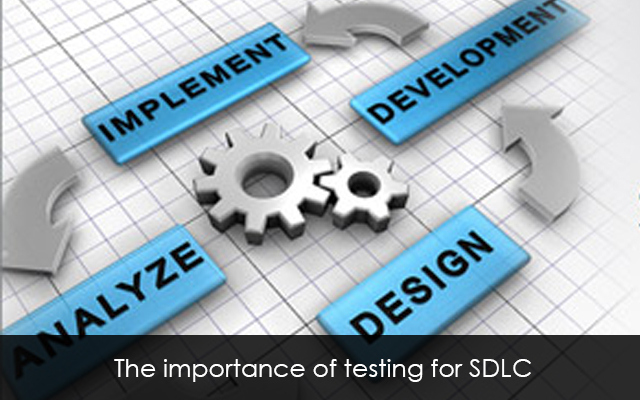 Software Development Life Cycle or SDLC has various types of models. Each of these models is used during the testing stage. Therefore, testing proves to be an essential component in SDLC. With the help of various types of testing including element, assimilation, user recognition and regression tests, the coders are able to provide a reliable application. The server system is any kind of system network is measured as the main terminal whereas the other procedures are considered minor terminals. Therefore, SDLC will include both the main and minor terminals while approaching the statement.There are, in fact, various phases of testing in SDLC that are indispensable. These are vital as they help in the development of the project and clears out the glitches, if any. Here’s a short description about each stage – Various Phases of Testing in Software Development Life Cycle The first phase of testing is known as the inception. At this stage the engineer gets the scope to identify the major requirements for the project. The data is generally recorded and kept in the architectural reference document. The main issues tackled in this stage are information, data and system designs. The next phase is known as elaboration. This is where the test engineers decide about the project plan. An important phase, here the complete design is being documented and stored in the System requirement document in addition to the product as well as requirement documents. In the JAD stage, commercial reviewer, planner, execution, project organization, etc are attended to. Next comes the construction stage. At this phase, the main role is played by the programmers. They build the project as per the approved plan at the JAD phase. The testers are supposed to follow the programmers for carrying out several adjustments. Several types of faults might be overlooked or misunderstood by the programmers. At this stage it is the testers who should be solving the problems. In order to develop the HLS or high level scenario, a testing group is needed. The testers are expected to ensure that all the elements in the project adhere to the standard quality affirmation. Finally, it is the transition phase where the errors found are tested once more by regression test. This helps in developing consistent systems. Purpose of testing: Testing, thus, plays a major role in developing software by identifying the errors and providing solutions to solve them. This is important so that quality solutions can be delivered to the clients. Every software has bugs and they need to be fixed. The main purpose of this process is to check whether there are any discrepancies in the development procedure. Quality cannot be sacrificed or overlooked when it comes to developing software. The resting process ensures that all the requirements are included and the final product is functional as expected. The test plan is document where all the necessary information about the project is listed. Every data required for each of the test cases are also to be found here. Thus, all the test cases can be validated in order to find out whether there are any errors in the system or the app. Once the test plan is approved it leads to the closure of the project. Thus, the cases are quite vital for designing templates. Additionally there are scripts which are subsequently converted into the cases. Early testing – a blessing: It should be noted at this stage that early testing is recommended for development processes. The quicker you find the bug, the better. It helps a lot of control the cost if bugs are found and fixed at early stages of the development. Moreover, if they are found early it takes lesser time to fix the issue. In addition, if the tests are written beforehand, it helps to fix the cases at later stages. Preparing for this early also prevents the occurrence of unknown risks and there is adequate time to deal with the delays and risks. Last but not the least, this process leads to the production of several intermediate products that can be checked to confirm whether they are meeting the standard needs of the users. Keeping user experience in mind is an essential component of this process. Hence, the software testing is an indispensable method when it comes to developing a bug free and user friendly system or app. If you are thinking of outsourcing software testing projects to offshore companies, you must evaluate them to see if they are sufficiently agile or not! We provide application software testing services. If you would like to hire software testers from us, we would be glad to assist you at Mindfire Solutions.
 Why Software testing? Every project has a chief aim to produce an outstanding and reliable product for its end users and so the case for any software application or product. While the developer develops different modules of a software application he understands the program flow and the logic of the application. But the end user is totally unaware of the logic section. Hence, the end user may find it difficult to browse the application without understanding the background logic. To create a virtual connection breeze between the developer and end user there is a set off people known as testers. Testers check the application from the user’s point of view to provide better user experience to the end user. So in order to get a good reliable and user friendly product we must give importance to the testing operations for an application. Future of software testing: Previously the testing operation was performed by QA testers i.e., quality assurance professionals. They use to test the application manually with their experience, expertise and knowledge. This is really a tedious job for the testers to check each and every aspect of the application manually which is not only time taking but also an inefficient process. Understanding the same, the automation testing gets evolved in 21st century. With different automation testing tools like QTP testing, selenium testing etc; it makes the overall testing experience a pleasant one with efficiency and time saving. Why future rely on automation testing? With the rapid progress of the smart phones and tablets in the industry, the testing process becomes extremely difficult for a tester to check the reliability of an application in different platforms like Windows, Android and IOS simultaneously. To achieve the same if a QA tester tests the application manually then it would be a tough and inefficient method for the application because the tester may leave some loop holes in the application which may lead to crash of the application while being used by the user on different platforms. To avoid this embracing situation, the future testers are depending on the automation testing tools for efficient testing. Automated testing can help in not only decrease in the effort for the tester but also at the same time increases the efficiency and productivity. Different types of automation testing tools: There are basically two different popular automation testing tools namely Selenium Automation Testing and QTP Automation testing tools. Well both maintained their own priority in respective fields but this is the duty of the tester to choose the best testing methodology for his project considering the cost, type and size of the application. QTP automation testing can be used for any application for windows platform. It needs the knowledge of VB script for the tester to make the automation testing successful for applications for windows platform. On the other hand, Selenium is a modern era automation testing tool which can be used for only web application testing but for all platforms i.e., Windows, Android, IOS. Moreover Selenium automation testing is an in expensive way of automation testing due to its low cost of ownership. Hence, for any software application testing except web applications we can rely on QTP automated testing whereas for modern web applications testing that run on Android or IOS platform, Selenium automated testing is a boon. Test your applications by hiring testing services of an application software testing company that fits your budget and time. We provide software testing services. If you would like to hire software testers from us, we would be glad to assist you at Mindfire Solutions.
 Better quality testing procedures always improve the quality of the applications – there is no doubt about this. Besides, they also offer a string of added advantages to the developers. They provide a wide range of coverage that is critical for detecting the bugs or loopholes pretty early along the course of the development. A thorough evaluation procedure also drastically reduces the cost of failure, saves time through a process of repeatability as well as quick or early verification. It also results in much better or improved resource productivity. Hence, it can well be said that at the end of the day, better assessment procedures do improve the quality of the applications. In fact, implementing the best software testing procedure for any app development is the best as well as the most promising way to not only improve the quality of the apps but to enjoy their benefits to the fullest. The applications that are under development have a tendency of changing constantly and becoming more and more complex with the passage of time, during the course of development. Their features also keep on growing, thus increasing the need as well as the pertinence of the evaluation. Still, in case of a number of application things do not take place in this way. In the case of these apps, all the features need to be tested upon implementation of even a single extra feature. This is required to ensure optimal behavior of the application in question along with a seamless experience of the end user, for at times it is seen that incorporation of even a single extra feature has changed the functionality of the entire software or application. Here is where, the need for the best checking procedure, preferably an automated testing procedure, is so important for the overall betterment of the application in question. There are a number of smaller or startup companies that cannot be considered as typical software houses. Still, they develop various types of software applications to fulfill their domestic requirements. These companies spend a sizeable amount of time for testing various features of the software application they develop, simply by running them and figuring out their functionality with different types of inputs, while keeping a close watch on the outputs they deliver, judging whether the outputs yielded are as per the predefined design. Though these companies leave no stones unturned in the evaluation, still there remains enough room for speculation, so far as the feasibility of the tests conducted are concerned, or the real time working of the codes. This is due to fact that these companies often do not follow any testing manual and conduct the testing on an ad hoc basis, which at times leave enough room for the presence of loopholes. Thus, using a proper testing manual and time is extremely effective, though it is not that expensive at all, for ensuring the quality of the application. Rigorous and high quality testing is always great when it comes to finding out whether a newly created code is affecting any aspect of the functionality of the software. Moreover, a comprehensive and structured evaluation infrastructure is always better that ad hoc software testing that is practiced by the smaller and the startup companies. While ad hoc testing is generally done manually where there is room for the tester committing mistakes, the bigger names with a structured testing infrastructure generally follow automated evaluation mechanism, where each and every flaw is spotted and rectified accordingly. These high quality assessment setups are naturally more effective and elaborative than the manual testing, though at times their scripting system might be expensive. Still, they are indispensable when it comes to betterment of a software or app. This is mainly for three reasons. Firstly, these automated testing procedures are excellent in finding problems pretty early in the development cycle. It is a common perception in SW development that the earlier the bugs are spotted, the cheaper it is to debug them. Thus, the best automated testing procedures suit this perception as they pick up the loopholes and plug them at the earliest and in an extremely effective and quick way. Secondly, the best automated testing systems keep a close vigil on the code from two dimensions – time and space. They keep a watch on the code in the dimension of time for once a unit test is written, it ensures that the code that is written will work at present as well as in the future. Thirdly, these high quality evaluation systems ensure that the developers get the freedom of going all out to alter the existing code. Over the course of time, the software systems get increasingly change resistant, as the developers get a bit reluctant to change the old or established code. However, this tendency can always be justified by the fact that any change in the old code can result in disintegration or split up of some other part of the application or software as a side effect. Thus, the presence of a better evaluation procedure always improves the quality of the application from all possible aspects. To get maximum benefits of testing, you may consider hiring services of a independent software Testing company. We provide software application testing services. If you would like to hire software test engineer from us, we would be glad to assist you at Mindfire Solutions.
 As an integral part of software development process, software testing is done to assess the quality of the product. Also, software testing makes it easier for developers to identify the differences between given input and expected output. Based on its objectives, an enterprise can conduct a wide variety of software testing. However, software testing can be divided into two basic types, i.e., black box testing and white box testing. Back box of functional testing focuses on output based on requirements and functionality. The testing normally ignores the internal mechanism of the system. On the other hand, white box or structural testing considers the internal system design, and determines the working of internal software and code. Thus, both white box and black box testing can be of different kinds. Different Kinds of Software Testing Unit Testing: Unit testing is considered as a white box testing. The testing is conducted to evaluate an individual unit or a group of related units. The testing aims to evaluate the output produced by the implemented unit against the given input. Integration Testing: Integration testing can be categorized as both white box and black box testing type. The testing is conducted when several components are grouped or combined to produce expected output. If the software and hardware components are related, integration testing evaluates the interaction between these components. Functional Testing: As a black box testing, functional testing is done to check if the application meets the specifications, and performs all the required functions correctly. The QA engineers have to perform a series of tests to validate the application’s feature by feature behavior. System Testing: System testing is considered as a type of black box testing. The testing is conducted to check the performance of the software in different environments. A software application needs to be tested in different environments to check its compatibility with different operating systems. Therefore, full system implementation and environment is essential for conducting system testing effectively. Stress Testing: As a type of black box testing, stress testing is conducted to evaluate the performance of the system, component or software under unfavorable conditions. So stress testing is always conducted beyond the limits of specified requirements. Normally, same process is used for both stress and performance testing. But stress testing applies a much higher level of simulated load. Performance Testing: As a black box testing type, performance testing is done to assess the software’s speed and effectiveness. The testing further ensures that the software is generating the expected results within a specific period of time, while adhering to the performance requirements. Usability Testing: The testing is conducted to determine the user-friendliness of the software application. So application flow testing is also done from the perspective on end users. The testing aims to determine if the software can be used by the by new users without any hassle. It also helps developers in deciding if additional documentation is required to make the software more user-friendly. Regression Testing: During the development process, the any module, functionality or the software as whole needs modification. Regression testing is done after a component, system or group of related units is modified. The testing ensures that the modifications are working properly, without affecting the expected results. Acceptance Testing: The software application is also required to meet the specifications required by the customer. So acceptance testing is conducted to check if the software meets the requirements specified by the customer. Normally, acceptance testing is performed by the customer or user before accepting the application. Beta Testing: The final testing is conducted before the commercial release of the software. Normally, beta testing is done by end-users or external teams. The black box testing aims to cover unexpected errors before the commercial release of the software. Nowadays, each enterprise has to conduct many kinds of software testing to deliver flawless user experience. It can further automate some of the testing efforts to optimize the software by identifying and fixing all errors, bugs and flaws within a stipulated timeframe. To get maximum benefits of testing, you may consider hiring services of a application software testing company. We provide QA and testing services. To hire software testing engineer from us, please reach out to Mindfire Solutions.
The software developers constantly explore ways to make the application popular by delivering richer user experience. Along with the application’s look and feel, they also concentrate on improving its overall performance. A constant increase is also noted in the number of organizations adopting test-based development approach to deliver flawless user experience. The overall performance of a software application is evaluated by conducting a variety of tests. Normally, the testers conduct performance testing, load testing and stress testing to evaluate different aspects of the software. However, these three types of testing differ from each other based on some common points.
Major Difference between Performance Testing, Load Testing and Stress Testing
Nature of Testing
Performance testing is conducted to evaluate the performance of the components of a system under specific situations. Normally, the testing aims to validate scalability and reliability of the application, along with resource usage under a particular situation. However, the testing is conducted as part of the overall performance engineering process that aims to find the performance issues in the software’s design and architecture.
Load testing is carried out the maximum load that a system can restrain. This form of testing is often referred as endurance testing or volume testing. Under this testing, a constantly and steadily increasing load is applied on the system till it reaches the threshold limit. Unlike other types of software testing, load testing can be conducted smoothly by using test automation tools like LoadRunner.
As the name indicates, stress testing is done to decide the level of stress required to break down a system. A number of activities are carried out to overload the system with excessive resources and functionality. Often negative testing is also conducted as part o stress testing to remove non-functioning components from the system. This form of testing is essential to evaluate the capacity of a web application when it is accessed at a time by a larger number of users.
Objectives of the Testing
Each software application also needs to meet a set of industry-defined benchmarks. The primary objective of performance testing is to check the system’s benchmark behavior. Instead of concentrating on finding errors, flaws and defects in an application, performance testing emphasizes on evaluating the software based on several benchmarks and standards. The performance testing results must be monitored closely and accurately to decide if the software meets industry-defined benchmarks.
The main objective of load testing is to identify the defects that affect the application’s performance negatively. The defects can be related to memory leak, memory mismanagement or buffer overflow. Also, the testing aims to decide the maximum limit of various components related to the application including hardware, database and network. Along with deciding the capacity of the existing system, load testing also identifies bandwidth problems and load balancing problems. Thus, the defects and components are managed effectively to make the app take more loads.
Stress testing is performed to check the behavior of an application after its failure. The post-crash reports are analyzed to decide what caused the failure. While determining the reason why the system failed, the testers need to ensure that the sensitive data remain completely secure despite the failure. An effective stress testing strategy will ensure that all components of the application become normal after the crash. The right stress testing plan can further make it easier to avoid the most terrible break downs in future.
An organization must keep in mind the key differences between performance testing, load testing and stress testing while choosing test automation tools. As the objective of each of these three types of testing differs, the testing automation needs to be done according to specific objectives. If you are planning to hire testing software companies, you must evaluate them to see if they are sufficiently agile or not!
We provide independent software testing services. If you would like to hire software test professionals for your projects, please contact us at Mindfire Solutions.

